



News Center
Brief and detailed introduction to centrifuge rotor
Types of centrifuge rotors
The rotor of a centrifuge is a crucial component in its operation, and a complete set of rotors for a centrifuge is even more expensive than a centrifuge server. The specifications, models, and types of rotors are also key indicators to consider the level of centrifuge production technology. The common key types of rotors are fixed angle rotors and horizontal rotors. In addition, there are also zone rotors, continuous flow rotors, vertical rotors, etc. These types of rotors are not common and will not be described in detail here.
1. Fixed angle rotor
There is a certain angle of view between the centrifugal tube and the drive shaft of the rotor, and the range of angle changes is generally between 14 ° -45 °, as shown in Figure 1. This type of rotor has a low center of gravity, long lifespan, large volume, high rotational speed, and can withstand a large centrifugal force of up to 800000g. It is used to separate particle samples with significant differences in settling speed. The distance between particles moving in a fan-shaped aqueous solution is very short, and when encountering surface particles, they slip along the wall thickness to the bottom of the layer, causing settling. Therefore, this type of rotor can quickly collect sediment. During the entire separation process, due to the effect of wall thickness, significant thermal convection may occur inside the centrifuge tube, which can have a negative impact on particles with the same foundation settlement velocity.
2. Horizontal rotor
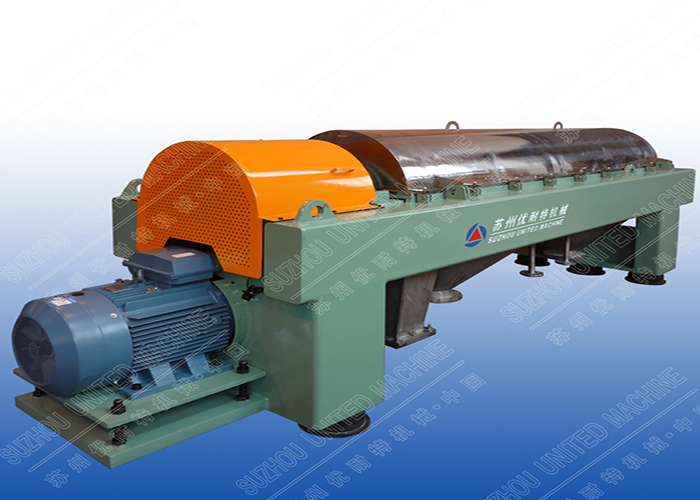
Also known as a flat rotor or a flat rotor. When the rotor is stationary, the centerline of the centrifuge tube in the rotor is parallel to the axis of rotation. When the rotating head accelerates, the centerline of the centrifuge tube gradually connects from the parallel plane to the vertical plane, forming a 90 ° angle with the axis of rotation. This type of rotor is primarily used for density gradient centrifugation of test samples. The distance between particle movement is long, and the relative centrifugation time is generally long. The relative composition of the aqueous solution to the wall thickness does not change during the entire centrifugation process, so the centrifugation effect is very good. However, because the particles disperse along the axial direction during centrifugation, rather than settling along parallel paths through the foundation. Particles sliding along the wall thickness when encountering the surface can also cause thermal convection, but it is smaller than that of a fixed angle rotor. When starting or shutting down at low speeds, it can cause vibration and harm the actual separation effect. Horizontal rotors are divided into two types: open and closed. Generally, those with a large volume, a speed ratio below 10000rpm, and a centrifugal force field within 16000 × g are used as open rotors for the initial separation of the test sample. To produce a smaller volume than the previous method, with a speed ratio exceeding 10000 rpm and a centrifugal force field above 16000 × g, in order to better reduce the harm of wind speed, it is generally used as a closed type. The key is to separate membrane proteins, chloroplasts, cytoplasm, etc. and perform density gradient centrifugation.