



新闻中心
Common causes of issues before maintenance of a centrifuge:
The centrifuge often encounters common faults, generally manifested as difficult startup or strong vibrations during idle operation. Below is a summary of maintenance-related problems:
**Issue 1: Failure to operate**
1. The centrifuge's starting current is too high, leading to tripping of electrical switches.
2. Excessive material in the cylindrical drum causes blockage of the screw conveyor.
3. Low air pressure or malfunction of the pressure controller.
**Issue 2: Strong vibrations during idle operation**
1. Misalignment of the cylindrical drum’s alignment at both ends during installation affects rotor dynamic balance accuracy.
2. Contaminated lubricant.
3. Main bearing failure.
4. Loose fit between the bearing hole and the shaft.
5. Screw conveyor bearing failure.
6. Unsecured ground bolts at the discharge port or rigid connection of the piping;
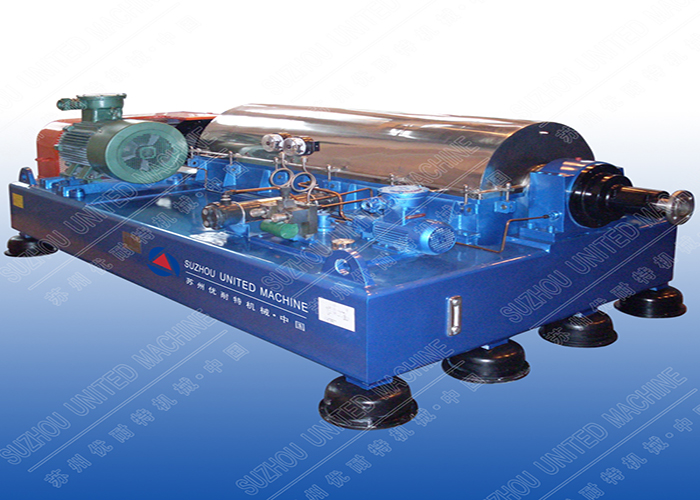
7. Loose engine flange causing differential vibrations;
8. Differential damage (typically due to insufficient lubrication);
9. Post-shutdown gate valve not closed tightly, allowing material ingress into the rotor drum and causing material leakage leading to imbalance;
10. Loosening and deformation at rotating component interfaces;
11. Poor dynamic balance of newly replaced rotor components;
12. Severe damage to related components;
13. Accumulated raw materials inside the casing causing friction with the outer rotor.
**Issue 3: High circuit breaker current.**
1. Belt and roller (especially main roller) slipping due to oil contamination, increasing friction energy loss (affecting differential main roller and pinion);
2. Differential failure (typically due to insufficient lubrication), causing scorching of differential casing, pinion, and input shaft.
**Centrifuge Maintenance**
**Issue 4: Bearing housing temperature exceeding 70°C or temperature rise exceeding 35°C during no-load operation.**
1. Oil contamination leading to lubrication failure:
(1) Foreign matter (e.g., steam, water, raw material liquid) entering the bearing housing;
(2) Long-term use causing degradation;
(3) Low-quality lubricant.
2. Bearing damage or excessive clearance;
3. Tight belt drive increasing main bearing friction power consumption and heat generation;
4. Insufficient lubrication supply or shutdown.
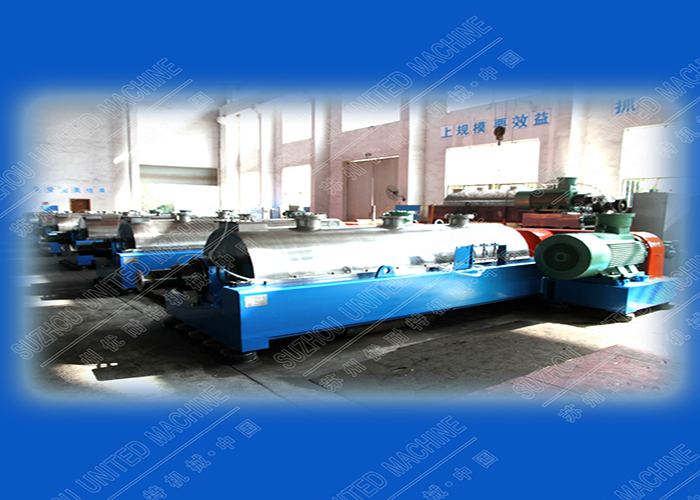
Question 5. Differential temperature too high (exceeding 85°C)
1. Differential oil/gas insufficient;
2. Heavy load;
3. Poor heat dissipation;
4. Differential bearing or component damage;
5. New differential.
Question 6: Drum and lead screw rotation speed too fast.
1. Excessive material and high load;
2. Contact/stuck condition between lead screw and drum;
3. Differential damage;
4. Coarse particles in material entering the centrifuge.
Question 7: Common failures during operation.
1. Low air pressure or oil pressure protection misoperation;
2. Main motor overload.
Question 8: Unable to discharge material.
1. Low slurry concentration or insufficient addition;
2. Insufficient solid-liquid ratio difference;
3. Equipment rotation direction reversed;
4. Differential damage;
5. Blockage or material accumulation in drum discharge port;
6. Material sedimentation between casing and drum.